Oz to PNG - The Long Way!
"Pilots Forced At Gun Point To Refuel"
(based on an article by Gareth Davey in CASA's staff newsletter 'Casawary' and republished with their permission.)
This is a true story, well almost. One of the participants summarised it like this: "I thoroughly enjoyed flying through the worst weather I have ever encountered, getting tangled up in a military coup, being rained on by a volcano, having the s..t scared out of us by a bomb blast, and having a Mooney pop up in our windscreen when least expected."
The adventure began in Australia. CASA staffer and Canberra Aero Club member Gareth Davey was accompanying a group of private pilots who were flying to Papua New Guinea the long way. In contrast with last year when they went the short way (about a 45 minute trip), they were looking for somewhere more scenic - why simply cross Torres Strait when you can circumnavigate the entire Coral Sea?
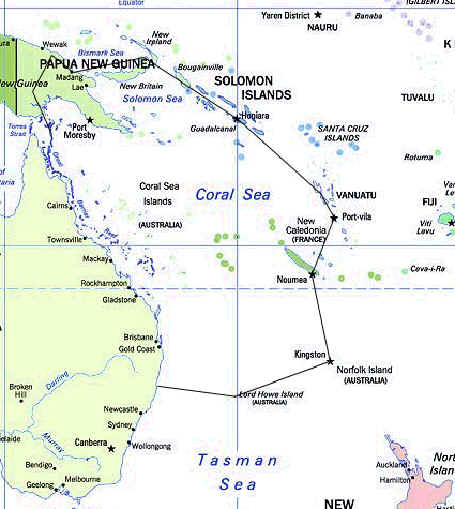
The "2000 Safari", as it was called, encompassed a fair slice of the South Pacific: Lord Howe and Norfolk Islands, New Caledonia, Vanuatu, and the Solomons. To make life even more interesting, several Safari pilots elected to fly VFR (Visual Flight Rules), and six of the eight aircraft were single-engined! Bob Bates of Trans Nuigini Tours had already travelled from PNG to Sydney via the Islands to ensure that there would be no problems with customs, immigration or civil aviation when the group travelled through the following week. The scene was set for a challenging couple of weeks.
|
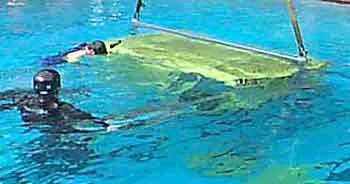
CareFlight survival training includes being strapped fully dressed and blindfolded into a mockup aircraft, dropped into the water, rolled upside-down, and seeing if you can find a way out along with five other people you don't know. Fun! But if you have done this excellent course, you'll relate to a helicopter scene in the new movie Perfect Storm that will bring back all those great underwater memories. |
"Do you find there's a rattling noise when you shake your head?"
, asked one of Gareth's work colleagues. Regardless of how well one's brain is connected, CASA's rules do allow private flights over vast amounts of Australian-administered salt water with few restrictions. And with the appropriate safety equipment on board, private pilots don't even have to have an HF radio (for long range communications) or to formally lodge a flight plan.Safety was a primary consideration, so the group consulted several CASA specialists for advice on flight requirements and survival equipment. Some pilots did an underwater rescue course with CareFlight. Others bought survival suits and small, handheld tanks of breathable air. All had life jackets, rafts and locator beacons. One, an optimist, included a set of golf clubs, while someone else had a "No Fear" t-shirt.
To maintain contact with air traffic services in the South Pacific, planes equipped with HF radio became radio buddies for those without. International flight plans were lodged by each aircraft based on briefing information obtained over the Internet.
|
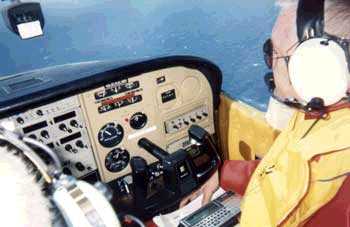
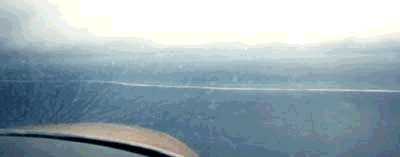
As the clouds got lower and the waves got closer, CASA staffer Gareth Davey combined computer technology with the age-old navigation method of dead reckoning. |
In freezing weather, the Safari left the Australian mainland on 27 May. People living on the east coast remember that weekend well - it snowed in the strangest of places. With cloud and rain increasing, the planes converged on Lord Howe Island from Brisbane, Port Macquarie and Sydney. An air traffic controller saw the radar blips heading east and radioed, "Is there a barbeque at Lord Howe today?" Really, a barbeque, in that weather.
This was the group's first overwater leg and looking at the whitecaps below provoked many thoughts: Which is the best direction to ditch, how cold is the water, how on earth will we get the raft out of the back seat before the plane sinks? It was also a good test of navigation instruments and bladder control.
|
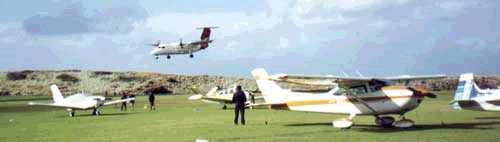
Lord Howe Island. Pilots turned out to see how Qantas manages with two engines. Due to the surrounding terrain, watching landings is a popular non-participative sport. (The Safari fleet comprised a Baron, Seneca, Trinidad, Saratoga, Mooney, Cessna 182, and two Bonanzas.) |
Taking an aircraft overseas is a great learning experience. Pilots rapidly qualify for a MOPAC (Master of Paperwork and Costs) on each country's customs and immigration system. Insects don't carry passports, so spraying that little can of insecticide before each landing was quite important. So was each copilot's attempt at sign language to convince airport officials that the can was actually used and "Please, can we open the window now?" Despite winter, the planes warmed up as they approached the equator and it didn't take long before the woollen survival suits, lifejackets and tropical heat had everyone smelling like feet. Spraying for flies became essential.
The Civil Aviation Authority in New Caledonia rolled out the red carpet in conjunction with the local aero club. They approved arrival and departure at Noumea’s domestic airport, Magenta instead of Tontouta, and installed temporary customs and immigration officials there, waived all charges, then gave everyone corporate caps, aviation calendars, T-shirts and a bag of tourist information.
As well, there was TV and newspaper coverage and a welcoming throng of around 100 people. It was indeed very impressive. General aviation seems to be thriving in New Caledonia and they’re keen to promote it.
Remember these exclusions in your travel insurance: severe weather, natural disasters, hijacking, riots, strikes and civil commotion? Well, for the record, there weren't any hijackings. But who could forget 5 June, the longest overwater leg of the trip. Six Safari aircraft were well on their way to the Solomons' main island of Guadalcanal. The last two planes, a Cessna 182 and a Bonanza, were refuelling back in Vanuatu (on Espiritu Santo). Suddenly, the man in the control tower rushed down waving a fax from DFAT saying there was "some problem" at Honiara. A coup was definitely a problem. Damn that insurance.
|
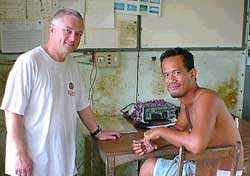
As good as it gets - a Solomon Islands weather briefing: "The barometer fell off the wall a few years ago, but my friend on the radio says the rain is clearing to the west." West of Alice Springs, more like it. |
Now imagine using the control tower’s HF radio to discreetly pass on DFAT's message to the rest of the Safari while the entire South Pacific aviation fraternity listened in. The lead aircraft code named Mother Goose and now only an hour from Honiara, seemed to get the idea and asked Honiara if there were any problems at their end. Civil Aviation in Honiara responded saying that Henderson Airport was secure so it was "It’s OK to land". The group back at Santo tried to work out if their cryptic "It’s OK!, it’s OK!" Meant "Yes, we understand there’s been a coup and we believe it is safe to continue", or did it mean "Yes, the hotel has confirmed our booking and dinner is at 7".
The Santo group took a vote and flew to the island of San Cristobal, just southeast of Guadalcanal. About 2000 villagers live in a little place called Kira Kira and they'd never seen such small planes before. Nor did they like their football game being disturbed - airstrips make great football fields. Deciding the aerial invaders were an Australian Army SWAT team, the local police arrived and supposedly "under instructions from Honiara" took their passports for safe keeping. Accommodated overnight in a local rest house, the pilots did their sums to see how far they could fly without a refuelling stop.
|
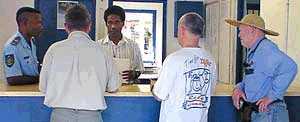
"No photos!" Negotiating the 'processing fee' for the return of passports in the Solomons. |
Meanwhile, the rest of the Safari had landed in Honiara and were instructed to park at the domestic terminal rather than the international one. That was a tad unusual. So were all the people with black painted faces and others with balaclavas over their faces – all of them brandishing AK47s. There were other gun totting guys in the back of trucks racing around the airport. It was not easy to identify who were the goodies and who were the baddies. The pilots were then confronted by an Australian Army officer attached to the Australian High Commission and by an Australian Federal Police officer also based there. They weren’t real happy to see fellow countrymen fly in just as they were expecting to lose control of the airport. The telephones were out and the road was closed between Henderson Airfield and Honiara. Their instructions were clear: "Forget customs and immigration, just refuel and get out of here; we don’t care where you go to but you can’t stay here. We cannot guarantee your safety nor that of your aeroplanes." Dinner at the hotel seemed increasingly unlikely.
There was a minor incident at the airport: one of the Safari ladies tried to go to the toilet but was refused entry to the terminal. She persisted and was eventually allowed in. Just as she settled, an armed man barged in and bashed his rifle butt on the cubicle door. "Madam," he said loudly, "I regret to have to inform you, we have no toilet paper!" Ah, the inconveniences of war.
Fully fuelled and grateful no hostages had been taken, the "Mother Goose" group flew on in fading daylight to Munda in the northwest Solomons. There they found the telephone system cut and many Australian tourists wondering how they'd get home. Out of radio contact, they waited for the stragglers to fly in from Kira Kira, which they did the next day, after the 182 was marooned again on another island airstrip, down to their last hour of fuel and waiting for "those walls of water in the sky" to clear.
|
Visual flight rule no.1: navigate by visual reference to the ground or water. There were times when the water on the windscreen was the best reference. |
Some interesting things were overheard on aircraft radio channels. After travelling under a cloudbank for several hours at just 500 feet above the ocean, you did wonder what the weather was like up ahead. Here’s one example – control tower to aircraft: "Do you have the runway in sight?" Aircraft replies: "We’re overhead at 700 feet and expect to see it shortly." Hmmm.
One of the aircraft carried a portable marine radio; handy for those low over-water approaches when ships were in the way.
With only two or three people on board, all the Safari aircraft were able to carry maximum fuel, so hanging around waiting for storms to clear was not really a problem.
|
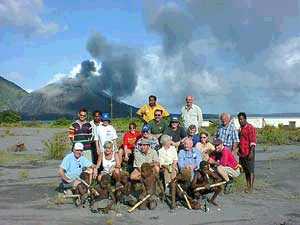
Standing on Rabaul's original and abandoned airport, now 3 metres higher due to volcanic ash deposits, the source is still active seven years after the original eruption. |
After flying high over Bouganville, the group was relieved to find no bullet holes and sunny weather as they arrived over the friendly PNG town of Rabaul. The volcano which had gone ballistic about seven years ago was smoking nicely and worth a flypast, not a fly-through as one pilot did and then spent the afternoon hosing down his plane. Moments after the adjacent photo was taken, the volcano silently spewed out huge amounts of matter, raining fine grey ash and leaving a thick layer on everything, including us (thank you very much Mr Volcano).
The overnight motel accommodation, in the original Rabaul town, was one of only a few buildings dug out after the main eruption. The rest of the place looked like Hiroshima in 1945. Locals reassured us that everything was fine, especially now that the tremors have stopped.
Feeling safe and happy that their travel insurance was working again, the Safari group enjoyed a relaxing and refreshing swim in the motel's ash-covered pool. Without warning, there was an explosion, a whistling sound and then a loud clang as a piece of red-hot metal landed near the pool. Donning their survival gear again, a scouting party found a burning tree stump about 300 metres away in which some local kids had put an old WWII mortar. All for fun, of course.
|
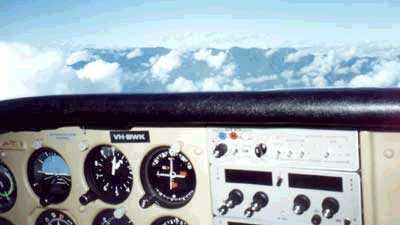
After getting comfortable with low-level overwater flights and the flatlands of PNG's Sepik River, markedly different flying techniques were needed to deal with the highland peaks rising up to 14,000 feet. |
From the new airport for Rabaul (Tokua) it was a pleasant and relaxing flight in fine weather along the north coast of the island of New Britain, past more volcanoes and over Long Island containing a large inland freshwater lake, and on to tranquil Madang. Our accommodation was at Malolo Plantation Lodge, on the north coast about 40 km from Madang. This picturesque property is set in the grounds of a former coconut plantation where the sunrise each morning over the water is spectacular. We enjoyed two nights here visiting Simon’s village and learning about his traditional village culture.
The next leg of the flight was a low level one, past two more volcanoes, Kar Kar and Manum Island and then along the Sepik River to Karawari Lodge. At Karawari airport – a grass airstrip, carved out of the dense jungle – there were about 2,000 river people to welcome us. Some of these people arrived by dugout canoe to witness the spectacle and to welcome the arriving aircraft.
All the excursions to the villages in the Karawari area were done by boat and many of the party bought Sepik carvings from the local villagers. This area with its exotic primitive carvings, is the cultural heartland of PNG. People carve just as their ancestors have done for thousands of years. The nightly entertainment was by Ambrose and the bamboo band, one of the highlights of the trip.
A morning departure was planned to fly across the ranges to Tari. This short flight of just over 80 NM involved the crossing of both the Central Ranges and the Yuma Range each of which towers to over 12,000 feet. The direct track also passes over the Giant Porgera Gold mine before dropping back down to the Tari Valley at 5,000 feet. The initial climb from Karawari to over 12,000 feet is accomplished within the first 30 NM of the flight so all pilots are aiming for their best rate of climb to avoid having to circle to gain the necessary altitude. The flight was made in clear skies after the fog had lifted and before the late morning build-ups began to occur.
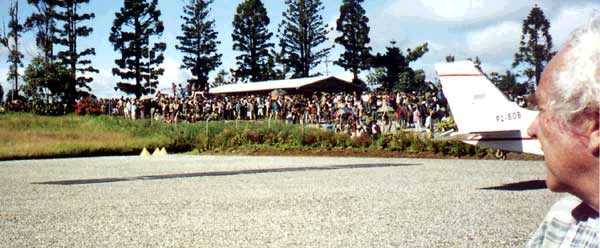
At Tari airport, we were again met by several thousand people. They were all inquisitive as to why we would want to come to Tari in so many aeroplanes.
|
At 5200 feet in the PNG highlands, Tari airport attracted thousands of villagers who came to look at the Safari aircraft. |
Our stay at Tari was at Ambua Lodge, nestled at 7,000 feet. It has spectacular views of the valley below and the surrounding mist shrouded mountains. The Lodge, built in the traditional highland’s architecture – with its signature thatched roof – has electric blankets for extra comfort in the cool mountain evenings.
The Tari people, called Huli’s, employ as their art, body decoration, face painting and human hair wigs decorated with feathers, flowers and moss. The Huli culture is the most vibrant, intact and colourful to be experienced anywhere in PNG. We all enjoyed a variety of activities. This included colourful touring, bird watching and nature walks amidst orchids, Rhododendrons, moss forests, traditional vine bridges and picturesque waterfalls.
Ready to go again
The flight from Tari to Daru, where we cleared PNG customs and immigration and said good bye to Papua New Guinea, was over mainly heavily forested lowlands. From Daru it was then only a short flight across the Torres Straight to Horn Island for Australian customs and immigration. By 14 June, 18 days after leaving the mainland, all safari aircraft had returned home safely to Australia.
Papua New Guinea is one of the best-kept tourist secrets in the world, and just a hop, skip and a jump from Australia by light plane, especially if you go the short way.
And the next trip?
It’s leaving for PNG in June 2001 via the short way – have a chat with Bill Finlen at Paradise Air Safaris for more details.